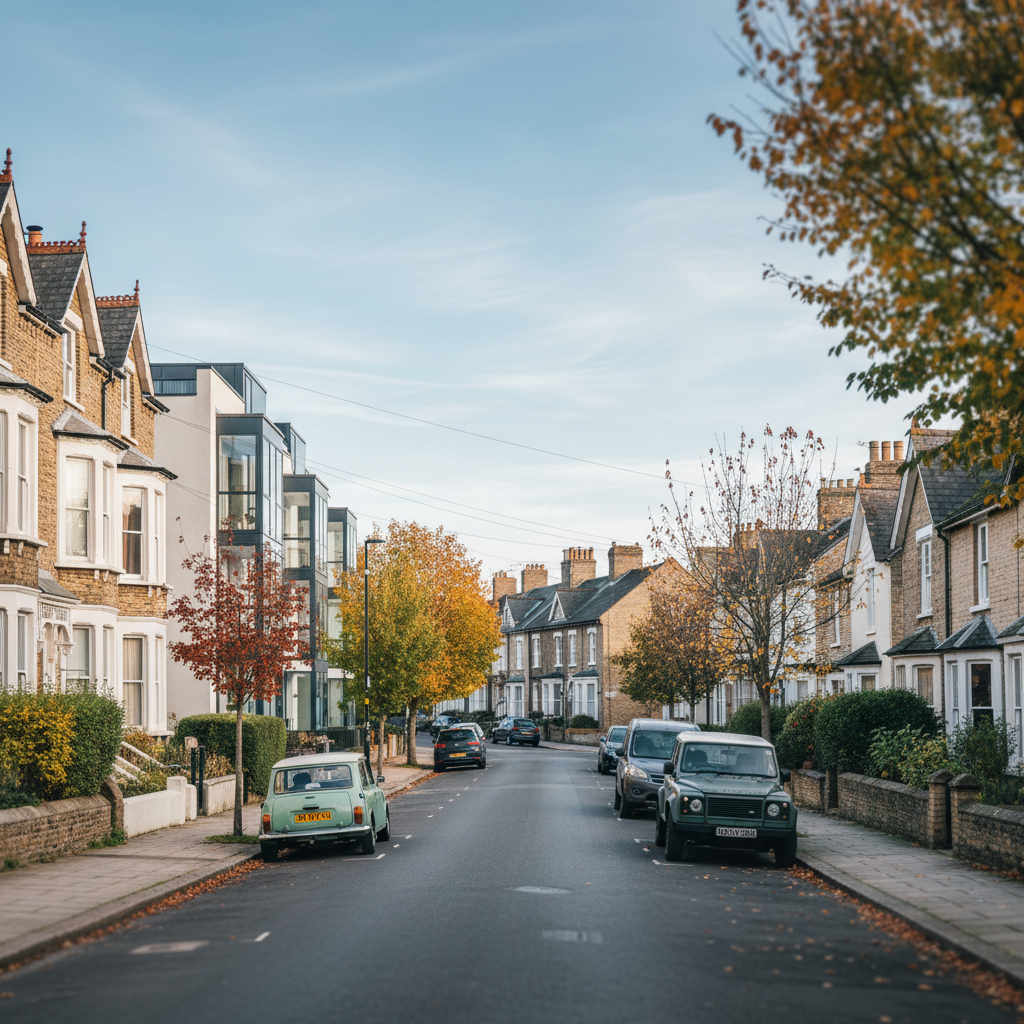
The Slow-Motion Tug-of-War, October 2026 UK Property Market
I’m going to go against the grain here: I believe the best time to move isn’t when the news is shouting about a "boom," but right now, while the market is behaving like a slow-moving river rather than a rushing waterfall. While some people are waiting for a dramatic "perfect moment," the real winners are those noticing the quiet, steady strength of the UK’s rooftops.
Imagine for a second that your house isn't just a pile of bricks, but a giant savings jar sitting on your street. What if you woke up tomorrow and realized that since May 2021, that jar has grown by over £42,000 without you lifting a finger? That is exactly what has happened across the UK. The average home was worth about £246,000 five years ago; today, it stands at £288,279.
The Great Balancing Act Right now, the property market feels a bit like a game of musical chairs where the music has slowed down, but nobody has sat down yet. In October 2026, the average price of a home went up by a tiny nudge—just 0.11% since last month. If we look at the whole year, prices are about 1.2% higher than they were last October.
It’s not a rocket ship, but it’s definitely moving upwards. Did you know that even though prices are rising, the number of people getting the "green light" from banks to buy a home (what the experts call mortgage approvals) dipped to 54,900 this month? That’s down from over 63,000 back in June. It shows that while people still want to move, they are taking a deep breath and being much more careful with their pennies.
The "Big Boss" in London Everything in the housing world usually comes back to the Bank of England. They set the "Base Rate," which is essentially the price the banks have to pay to borrow money. It has stayed exactly the same at 3.75% since 18 December 2025.
Think of this rate like the thermostat in your hallway. Because the "temperature" hasn't changed in nearly a year, mortgage deals have become more predictable. However, with the cost of everyday things like milk and bread (inflation) creeping up to 3.3% this month, the Bank is keeping a very close eye on things. The good news? Wages are growing at 3.7%, which means, for many, pay packets are growing slightly faster than the cost of living.
What does this mean for us in null? You might wonder why I’m talking about the whole country when we live right here. Well, the national market is like the tide—when it rises or falls, every boat in the harbour moves too.
When the Bank of England keeps rates steady, it affects how much a family in null can afford to borrow for that extra bedroom. While our local neck of the woods has its own personality, we aren't immune to these big shifts. If fewer people nationally are getting their mortgages approved, it can mean fewer buyers through the doors of homes in null, which usually means sellers have to be a bit more realistic about their asking prices to get a "Sold" sign up.
Looking Ahead So, where are we heading? I don’t see a sudden sprint coming, but rather a purposeful walk. Because prices are still growing slowly and wages are rising, the "tug-of-war" between high prices and what people can afford is reaching a fair middle ground. For anyone thinking of selling, the key right now isn't just picking a number out of thin air, but understanding that buyers are being very picky. If you're buying, you have a bit more breathing room to negotiate than you did a few years ago.